
In the late1700s, there were food riots across the Midlands in response to poor harvests and high grain prices. Farmers were accused of withholding grain to keep prices high. Labourers couldn’t afford even a loaf of bread. In Longnor, people experimented with making bread from potatoes instead of rye or wheat.
Food rioters risked severe punishment as they seized waggons of wheat, flour and potatoes and sold them cheaply to local people. They adopted the battle cry “we’d rather be hanged than starved”. The unrest lasted for years.
Something needed to be done to meet the food needs of a growing population. In 1793 a Board of Agriculture and Internal Improvements was set up, and carried out a UK-wide survey of farming practices. Longnor’s Joseph Plymley edited the 1803 General View of Agriculture for all of Shropshire.
Plymley backed the move to larger farms, arguing that small farms weren’t profitable enough to maintain a team of horses, which meant the land became neglected. It was better for food production and local employment for farms to be bigger:
“I look upon a farm of 100-200 acres as desirable for the occupier and the community.. upon these he keeps from four to six horses: about 160 acres is a quantity well adapted to five horses, which are considered as sufficient for a waggoner and ploughboy to look after: it is strength sufficient to work the strongest land, break up leys, draw manure, work two pair of harrows, and keep three waggons at work in getting in harvest. Five horses will prepare 60 or 70 acres for grain, and do other business… Large farms where the occupier has abilities and capital, are the most profitable.”
In the report, there was also praise for local farming women:
“In the women’s department there seems to be a greater exertion of industry than I have remarked in most other counties. Besides brewing, baking, providing for the family.. and managing the dairy, the farmer’s wife.. in the evening and at spare hours, carries on a little manufacture, and gets up a piece of linen cloth for sale every year.”
Farm labourers should drink less, value education more, and grow more of their own food. That was the general view among progressive landowners in the early 1800s. A debate was also raging about housing farm labourers. There were competitions to see who could design the perfect labourer’s cottage. Joseph Plymley recommended that each cottage should have land (three to six acres) to keep a pig and grow food – though he recognised that farmers, who employed the labourers, weren’t so keen, as they didn’t want their workers going off to tend their own land at key times in the farming calendar.
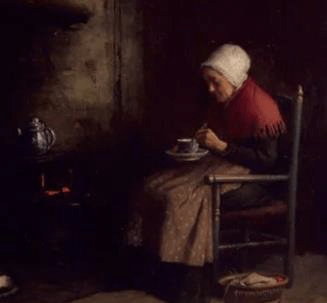
Plymley recommended that cottages should have two bedrooms, but cautioned against making them too big:


He also had advice for tenant farmers, observing that too many farm buildings were in an inconvenient place:
“the following particulars should be attended to: 1st a centrical part of the farm; 2dly a proper distance from the road; 3dly a high, but not an exposed aspect, that the farm yard may be warm for young cattle, that the manure be carried downhill, and that the liquid manure may run over as much land as possible.”
 Longnor Village History