1086 AD
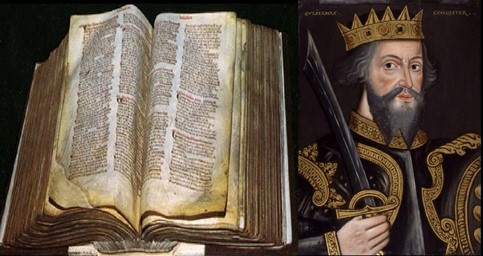
When William the Conqueror arrived in England in 1066, he needed to know how much his new land was worth, so he ordered an audit of anything taxable. Inspectors recorded all landowners, tenants, peasants, moveable property and each manor’s annual incomes. Written in 1086, the Domesday Book – as the audit became known – isn’t a census of the whole population, but it does tell us quite a lot about who lived around Longnor.
Arable land was measured in ‘ploughs’ – how many plough teams it needed to work that land. Woodland was measured in ‘pigs’ – how many pigs the wood could sustain. Grassland was not part of the audit.

Longnor’s 20 households were headed by farmers and four slaves. The Domesday Book doesn’t mention a miller, even though there was a mill.
The population of Shropshire in 1086 was still sparse. The Domesday Book lists around 440 different places in Shropshire – three-quarters of those had fewer than 15 households.
Most Shropshire households farmed between about five and 30 acres.

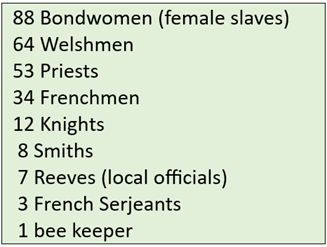
Other people listed in Shropshire included:
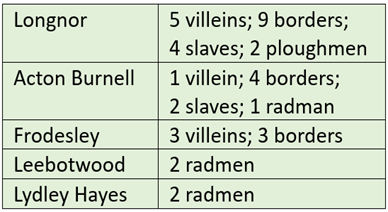
Longnor was one of the largest settlements in the Stretton valley:

In 1086, Longnor people paid their taxes to Azo (Bigot), the Lord of the Manor. He in turn paid taxes to Reginald the Sheriff, who was one of the seven Tenants-in-Chief in Shropshire.
 Longnor Village History