1158 – 1312 AD
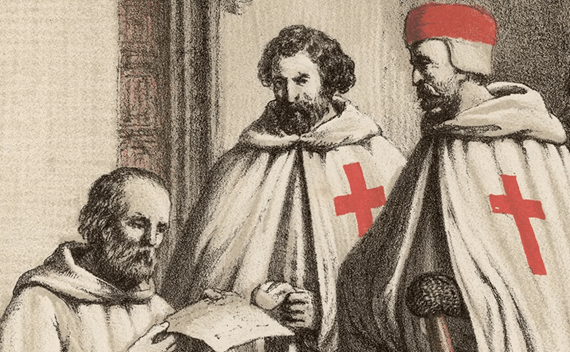
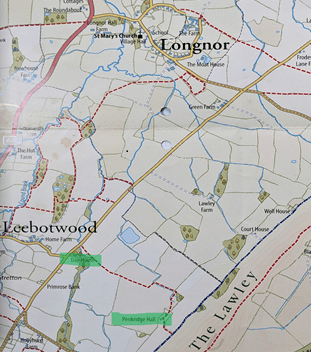
The Knights Templar were a military Catholic order. They took an oath of individual poverty, but as a group were extremely wealthy landowners who didn’t have to pay taxes and were answerable only to the Pope. They had a regional headquarters of Lydley Hayes around Penkridge Hall and the Day House in the 12th and 13th centuries.
They dominated the area. By 1274 they had taken over land stretching as far as Cardington, Enchmarsh, Comley and Wilstone. The Sprencheaux family and Haughmond Abbey controlled the rest of the area around Longnor.
Locally the Templars had fish ponds, a mill, at least 16 farm servants (of whom eight were ploughmen) and livestock – including 26 oxen. The Knights themselves were not allowed to work and so they employed many servants and labourers.
They set about exploiting the land as much as possible – growing wheat and oats, and selling stone quarried locally. In 1308 they produced 254 sheep fleeces. They don’t seem to have been particularly good neighbours, and were involved in a number of disputes over land. They lost the argument when trying to take over Chatwall and Causeway Wood, but were given the right to fish in Cound Brook.

From 1099, many Christians travelled to the Holy Land to make pilgrimages. This was a dangerous activity, with bandits lying in wait along the way. The Templars protected pilgrims on their journeys.

The base in Lydley Hayes was probably both a recruitment centre and an early sort of bank. Pilgrims travelling in the Crusades would deposit their valuables with local Templars and receive a credit note that could be used on arrival in the Holy Land. The Templars became wealthy through donations of money and land by supporters of the fight for Christianity.
Eventually support for the Knights started to drain away. The Order was formally disbanded by Pope Clement V in 1312.
 Longnor Village History