C. 1275
Longnor Church is the oldest surviving building in the village, built in around 1275 by Roger Sprencheaux III. He was the great-grandson of Elric Sprencheaux, the first recorded Lord of Longnor Manor, and was a man of some consequence in the county, holding the office of Sheriff of Shropshire.
In deciding to build a church in Longnor, he may well have been influenced by his even more important neighbour three miles away in Acton Burnell: Robert Burnell, a close friend of King Edward I, Lord Chancellor (1274-92), Bishop of Bath & Wells and one of the most powerful men in England.
Acton Burnell Church was built at almost exactly the same time as Longnor, and Church Architect Andrew Arrol is certain that both churches were built by the same masons:
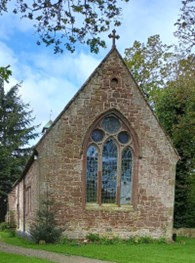
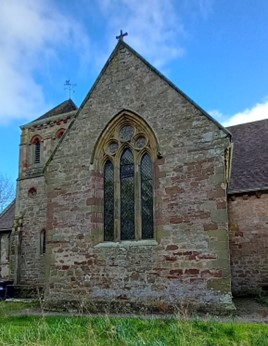
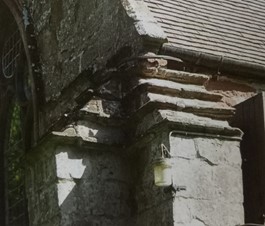
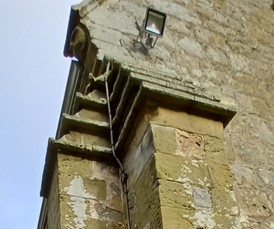
“These two churches are small master works by court or metropolitan masons… There are a whole series of architectural clues: … a beautiful three light east window with circular tracery masonry; groups of single lancets arranged in asymmetrical groupings with style and design very similar to that found at St Mary’s, Acton Burnell… and the west wall is buttressed with right-angle buttresses showing curiously designed horizontally fluted cappings of very similar design to that found at Acton Burnell.”
Longnor Church was originally built as a Chapel to Longnor Hall, which at that time stood just a few metres southwest of the churchyard, on a low mound now hidden in the trees of the Deer Park.
Church historian Sir Nicholas Pevsner describes the church as “a perfect example of Early English architecture”. A gallery was added in 1793 and extended in 1840, at which point the original south and north doors were blocked off and a new door made at the west end. But otherwise, the stonework has hardly been changed since the builders left it 750 years ago.
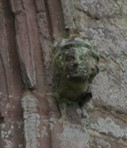
The carved heads by the East window are believed to be of the reigning monarch and his wife. But is it Henry III, who died in 1272, or Edward 1, who succeeded him?
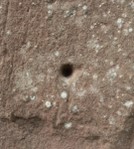
A medieval ‘scratch dial’– an early form of sundial – carved on the south wall of the church.
In 1283, just after Longnor Church was built, King Edward I held a parliament in a large barn next to Acton Burnell Castle (still visible today). For the first time in English history, commoners as well as nobles took part – a key moment in the development of British democracy.
 Longnor Village History