The first mention of an iron furnace and forge at Longnor is in 1605, when a man called Holbeck leased the site. He possibly chose it because of the ready supply of timber from the woodlands around Frodesley and Longnor, which could provide the charcoal needed to fuel the furnace.
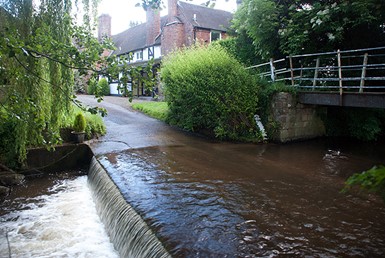
For nearly 200 years it provided steady employment. In the early 1700s it was making 100-150 tons of iron per year.
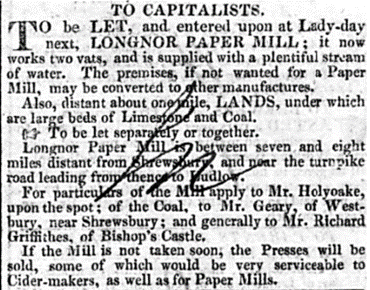
By 1800 the business was being advertised, and it was suggested it might make a good site for a papermill:
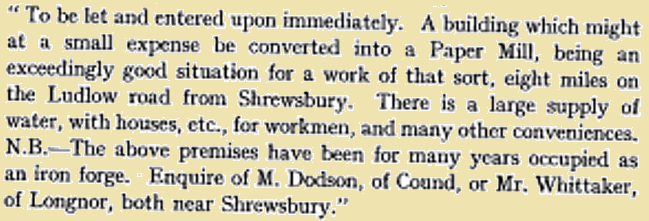
A successful Bridgnorth industrialist called William Hazeldine – who had supplied iron for the Chirk aqueduct and many of Thomas Telford’s bridges – took over the site and turned it into a papermill. In 1806 William Cummings was a papermaker in Longnor when he married Elizabeth Smith from Condover.
Maybe paper wasn’t Hazeldine’s strength, because the papermill ran for only 15 years before closing in 1815.
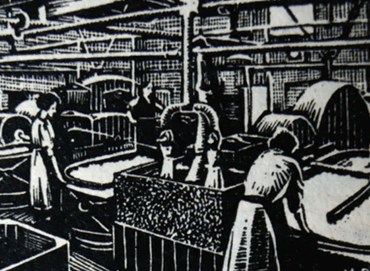
In 1800 there were 430 papermills in England and Wales. They made paper with rags that were soaked, and pulped with water-powered machinery. The pulp was then pressed and dried.
The problem was you needed a pound of rags to make a pound of paper, and the ragmen who collected old rags door to door couldn’t keep up with demand.
In the north of England in 1803, posters appeared around town:
“To the Ladies – Genteel women, who amuse their idle hours in working, frequently throw scraps of linen and cotton of various kinds into the fire. It is requested most humbly, that every lady will reserve these trifles, and direct their maid servants to sell them, because their so doing will prevent £60,000 being annually exported to foreign countries for the importation of old rags to make paper, and which in consequence will become cheaper.”
Coal, Lime and Bricks
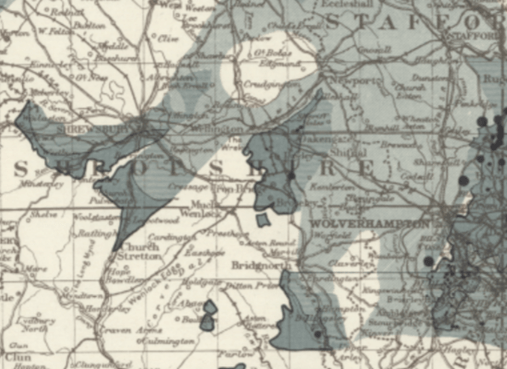
Longnor is right on the edge of the coal fields south of Shrewsbury, where small collieries were active in the mid-1700s for around 100 years. There were numerous small coal mines dotted around our area – at Pitchford, Frodesley, Stapleton and Smethcott, with the largest between Longnor at Leebotwood in the fields near what is now New House Farm and The Fields.
Small mines were typically leased out to people who used the coal and lime extracted to fuel lime kilns and brick kilns near the mine entrance. Red bricks stamped ‘Leebotwood’ are found in lots of houses around Longnor.
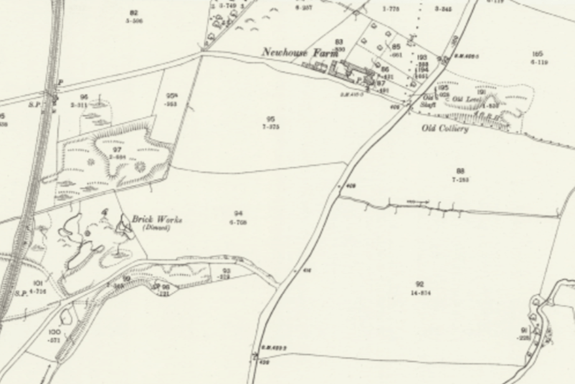
3,664 tons of coal were extracted in 1832. By 1882 Ordnance Survey was marking the mines as disused. The brickworks were marked as disused on 1902 maps.
The coal workers lived in huts near the mine shafts, as well as in Longnor and Leebotwood. In 1831, 26 miners were living in Longnor. In the 1841 census, 28 miners, a lime burner and a tile maker were living in Leebotwood. But by 1851 there were only four miners and one bricklayer in Longnor. And by 1861 there were no miners living in Longnor.
According to Trevor Thomas, who had coal mines on his father’s fields opposite New House Farm, the coal was lying in shallow seams about 15-20 inches thick. It was soft and poor quality. The mine shafts were only a few feet deep. Once the railway came in 1852, better quality coal could be brought in, and soon local mines closed. He remembers two of the mine shafts being filled in:
“When I first remember the pits they were both open and you could see down for about 20 feet. The Coal Board filled them in the first time, but they sank. Then the Council came and tipped tin cans down the pit to fill them up. They filled them up and levelled them off, but they sank again. Later we filled them again. It’s only been the last ten years that they’ve stopped sinking.”
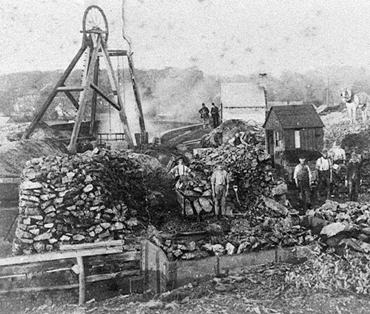
In 1872 a lease was issued to seek mining sites in fields around Bentley Ford, the Lawley, the Day House, and the Court House. Apparently the work never took place.
 Longnor Village History