Medieval Longnor
In medieval times, little land was owned outright. Instead the lord of each manor, or village, had rights given to him by the king, and tenants rented land from the lord. The Lords of Longnor Manor would have demanded rents and labour from their tenants, but the tenants had firm rights to crop land and common land, which were passed on from one generation to another.
There were three ‘open’ fields in Longnor, all bordering the Cound Brook. These were probably several hundred acres each and would have been divided into narrow strips, cultivated by the tenants.
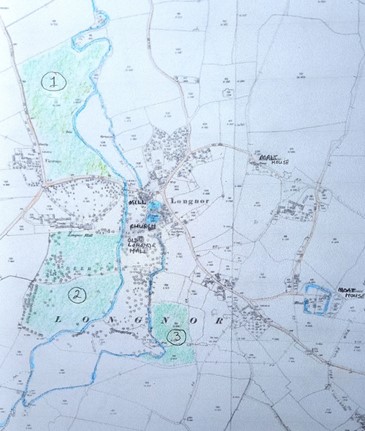
This shows roughly where the original ‘open fields’ were:
1 – Nayles Field, also known as ‘the Field towards Micklewood’
2 – Rea Field, from the old name for the Cound Brook
3 – Wissybrook Field
Much of the east and south of the village were covered in woodland – part of a broad belt of forest stretching northwards from the Lawley to Condover. In the late 13th century, the Lord of Longnor Manor, Roger Sprencheaux III, encouraged his tenants to clear some of the woodland by offering them free tenancies on favourable terms. These were probably the original sites of the Malthouse and The Farm and other houses on Back Lane.
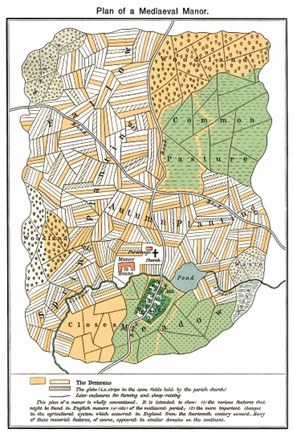
While most of those living in Longnor in medieval times would have been working on the land, in 1379 the village is recorded as also having a butcher, a carpenter, a tailor and a minstrel.

Longnor Mill, mentioned in the Domesday Book, passed to Haughmond Abbey after the death of Roger Sprenchose I in 1221. But it was brought back into the Longnor estate by Edward Corbett in 1544.
There were said to be six mills in Longnor in 1617.
Black and White Longnor
We would like to research the buildings in Longnor – who lived in them over the years, etc. If you can help, please do get in touch.

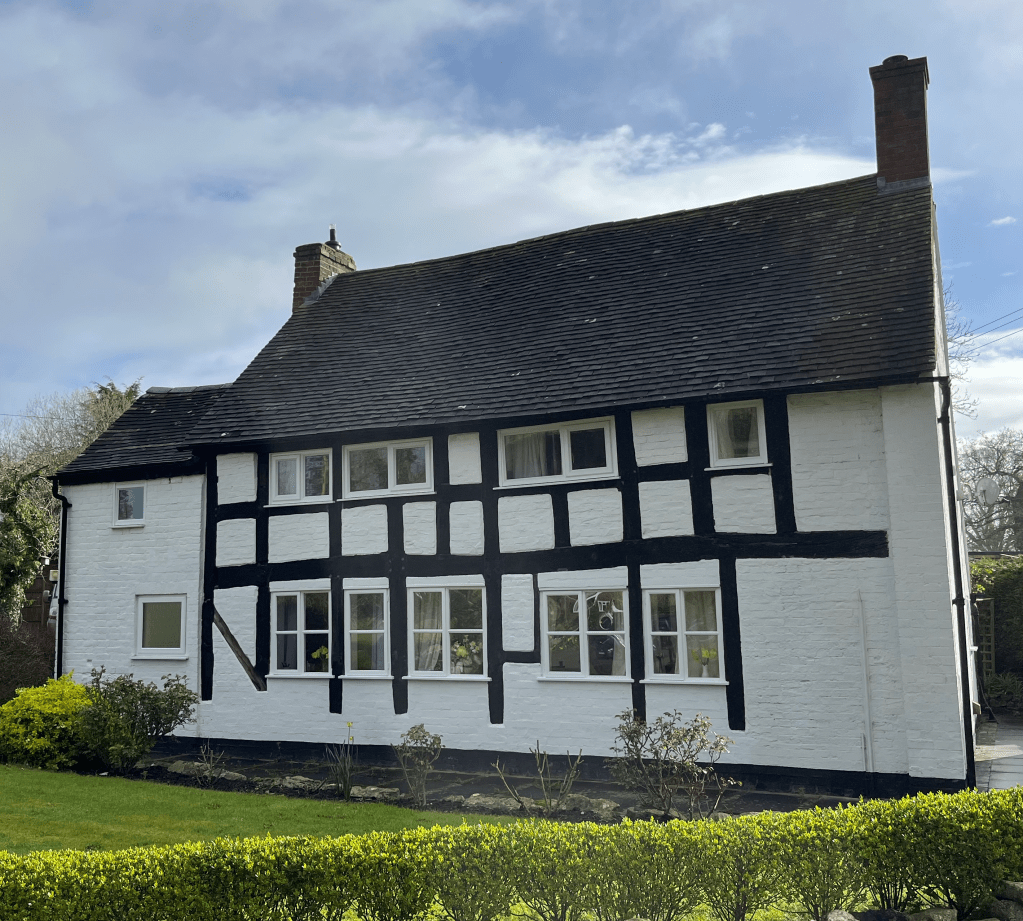
Quality Row was built as one house in the late 1400s/early 1500s, according to Historic England. So it is possibly the oldest building in the village after the Moat House.
Mid/Late 17th Century Buildings




 Longnor Village History