Life could be tough in Longnor in the 1800s. Most of the village worked in agriculture where farm labourers’ wages were low and work could be insecure. Widows and widowers with young children were particularly at risk of poverty, as were mothers with illegitimate babies, and elderly men who were too frail to work.
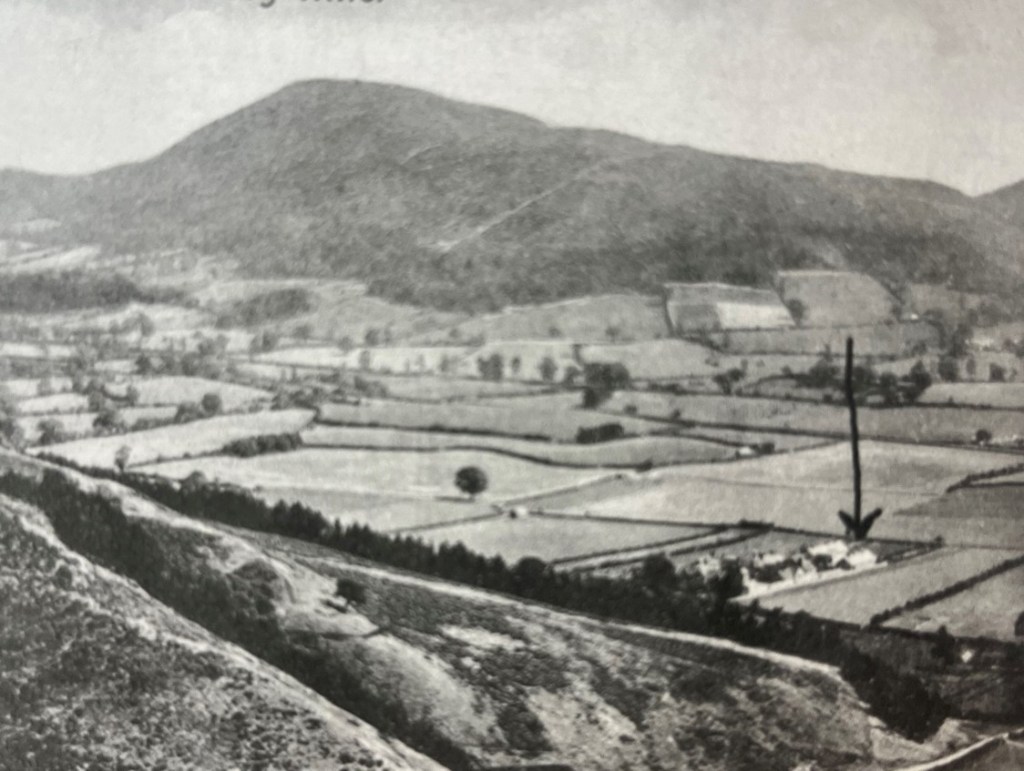
Pre-1834 – In theory, each parish had responsibility to look after their poor. In reality, some landowners did everything they could to drive the poor away – demolishing cottages and seizing common land.
Poor Law Amendment Act 1834 – The Government increased support for the poor. 600 workhouses were soon built, each to cover several parishes. Church Stretton Union Workhouse served a population of 5,703 people in 14 parishes – including Longnor, Acton Scott, Cardington, Church Stretton, Hope Bowdler, Leebotwood, Rushbury, Smethcott and Wistanstow.
The April 1881 census records a number of Longnor people living in the workhouse. We are grateful to the Church Stretton Area Local History Group for researching the following stories:
John Davies was three years old when he went to live in the workhouse with his younger brother and mother, following his father’s death in 1877. The guardians of Church Stretton workhouse did their best to school and look after the children. They vetted jobs and employers when the youngsters left the workhouse in their early teens to work locally, and provided them with work clothes.
At 16, John had left the workhouse and was working as a cowman at John Lee’s farm in Longnor. At 25, he was working as a waggoner for the Pitchford family near Rushbury, when he was riding two-up on a horse with his master’s son. The horse bolted and both men were thrown off. The Pitchford lad survived with bruising, but poor John died a few hours later.
John’s little brother, Walter, fared better. After the workhouse he lived with his aunt and uncle in All Stretton, joined the army, survived the First World War, married and had children.
John’s little brother Walter fared better.
Ann and William Jones were the illegitimate children of Jane Jones. They were both born in the workhouse. By 1871, aged three and one, they were living in Longnor with their 19-year-old mother and their grandparents, George and Sarah Jones. George died later in 1871, and by 1881 the children were back in the workhouse living there without parents. Responding to a request for a servant, the workhouse guardians sent 12-year-old Ann to work for Joan and Peter Clee in Woolstaston. There’s no record of her after that.
William grew up in the workhouse. Aged 14 he was sent to work as an indoor farm servant on John Hartley’s farm at Ticklerton. Two weeks later he died after complaining of a headache and dizziness. The inquest concluded that he died of an ‘effusion of blood on the brain’ and that there was no sign of violence.
Edward Lloyd was born in Longnor in 1875 to 17-year-old Sarah Lloyd, an unmarried domestic servant. He grew up in the workhouse without parents or siblings. His mother married and had further children but doesn’t appear in Edward’s life. Edward worked on local farms, then on the railways. He married, had children and lived a relatively comfortable life in Coleham in Shrewsbury.
He died aged 68.
In 1871 Thomas Hill was a 62-year-old unmarried farm labourer, lodging with William and Hannah Bullock in Longnor. Previously he had lived with his widowed mother until she died, then with John and Maria Harris in Smethcott until they died. By 1881, aged 72, his precarious life as a lodger was over and he was in the workhouse. He died there aged 77.
 Longnor Village History