Geological Beginnings
600 million years ago Shropshire lay 60 degrees south of the equator – near where the tip of Africa is today. Longnor was right on a fault line between two huge tectonic plates that were pushing up against each other. The western plate eventually sank under the eastern. This created volcanic activity in the earth’s crust that spewed out volcanic rocks and forming a line of hills – Ragleth, Caradoc, Lawley and Wrekin – along what we now call the Church Stretton Fault.

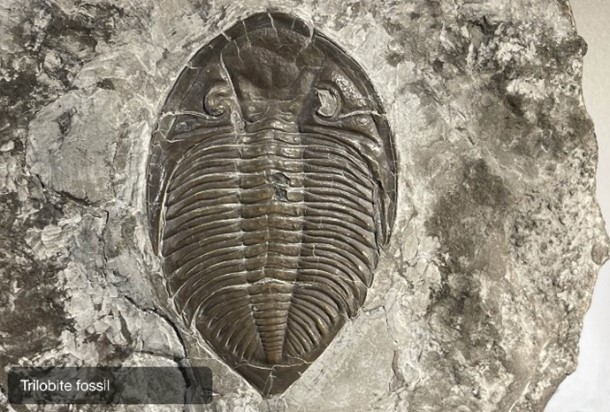
550 million years ago the whole area became submerged under a shallow tropical sea. Creatures called trilobites crawled along the tropical sea bed.
500 million years ago tectonic plates were on the move again. Longnor moved north at a rate of 3cm a year, taking 500 million years to travel 7,500 miles north.
As Longnor made its incredible journey, it passed through many different climates and environments. Each zone is reflected in our local rocks – like sandstone from the shallow sea beds, and limestone from sub-tropical coral reefs.
2 million years ago Britain experienced the Ice Age. Shropshire was on the southern edge of the blanket of ice. The top of the Long Mynd and Caradoc peeked out of the 300-metre-deep ice, which petered out at Marshbrook.
16,000 years ago the ice began to retreat. It left behind a thick layer of clay, sand and gravel in the Stretton valley. Grasslands re-emerged. And mammoths – who’d retreated out of Europe during the coldest period – returned.
Source: ‘Geology of the Church Stretton Area’ by Peter Toghill, Shropshire Geological Society
The Stretton valley is one of the most varied geological areas of Britain. We have rocks from 11 of the 12 main geological periods, including some of Britain’s oldest rocks.
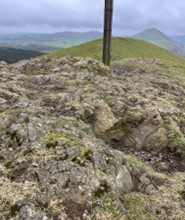
Over time, Longnor people have made the most of our rich geology: taking refuge on the hills; capitalising on the transport corridor of the valley; quarrying lime, sand and gravel for building materials; mining coal laid down 300 million years ago; and farming on the boulder clay and silt in the valley.
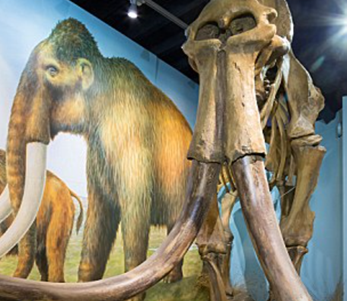
The three mammoths whose remains were found in Condover in 1986 are thought to be Europe’s last mammoths, dying around 14,000 years ago. Scientists now believe mammoths weren’t hunted to extinction, but died out because they didn’t adapt quickly enough to the climate. Rapidly rising temperatures meant wetland plants and forests took over the mammoths’ grassland feeding grounds.
World Famous Fossils
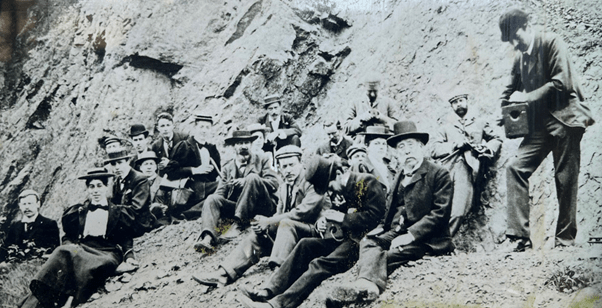
A trilobite found in 1888 at Comley, just south of the Lawley, was declared the oldest fossil in the world. It created a rush of people coming to chip away at the quarry.
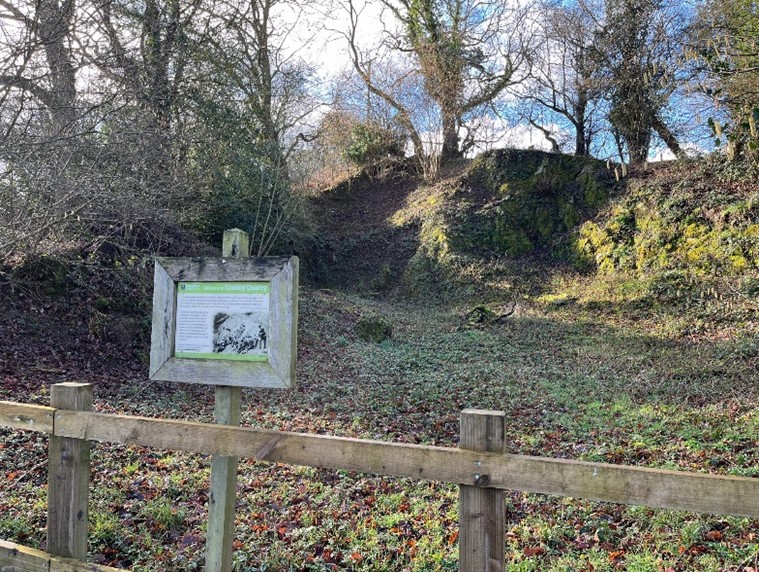
(Excavating is no longer allowed at Comley.)
 Longnor Village History