1463 AD
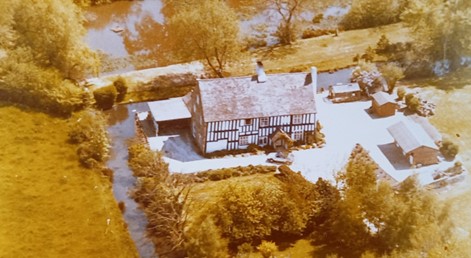
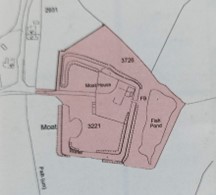
The current Moat House dates from 1463, making it the oldest house in Longnor. The trees that were used for the timber framework were planted at least a hundred years before that. And the moat is older still – probably first dug in around 1230. It encloses an area of 5,072 square metres (1¼ acres) and is naturally filled by a spring.
It’s not known who originally constructed the moat, but they may have made use of a site that had been occupied for hundreds of years. The site is first mentioned in deeds dating from 1290, when Richard and Emma Clerk were granted a licence from the Lord of the Manor, Roger Sprencheaux III (who built Longnor Church) to widen their “old moat” by 12 feet. Richard was clerk to Sprencheaux, who gave him the piece of land at a rent of one rose.
In 1377, the Moat House was bought by Edward Acton, whose descendants occupied it until 1610. The current house was built by Thomas Acton.
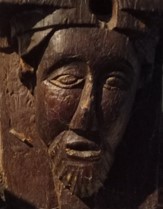
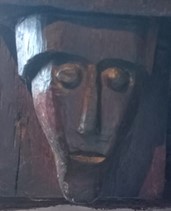
Heads carved into two corbels (brackets) are believed to be of Thomas Acton and either his first wife, Jane Stepleton, or his second, Joan. Once there was a third head – possibly that of King Edward IV, deposed in 1470.
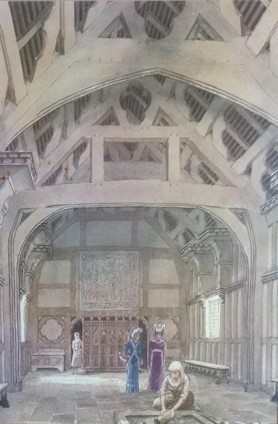
The area within the moat probably included accommodation for 30 – 40 people, as well as buildings for all sorts of purposes: barns, chicken houses, kitchen, brewery, bake house, granary and stables. The medieval fishpond is still there. And recently the foundations of a chapel were found.
The Moat House became a farm from about 1600 until 1865 and was then sub-divided into two farm worker cottages.
In 1964 it was condemned as unfit for human habitation and sold out of the Corbett Estate. Since then, the owners have extensively restored the house and grounds.
 Longnor Village History