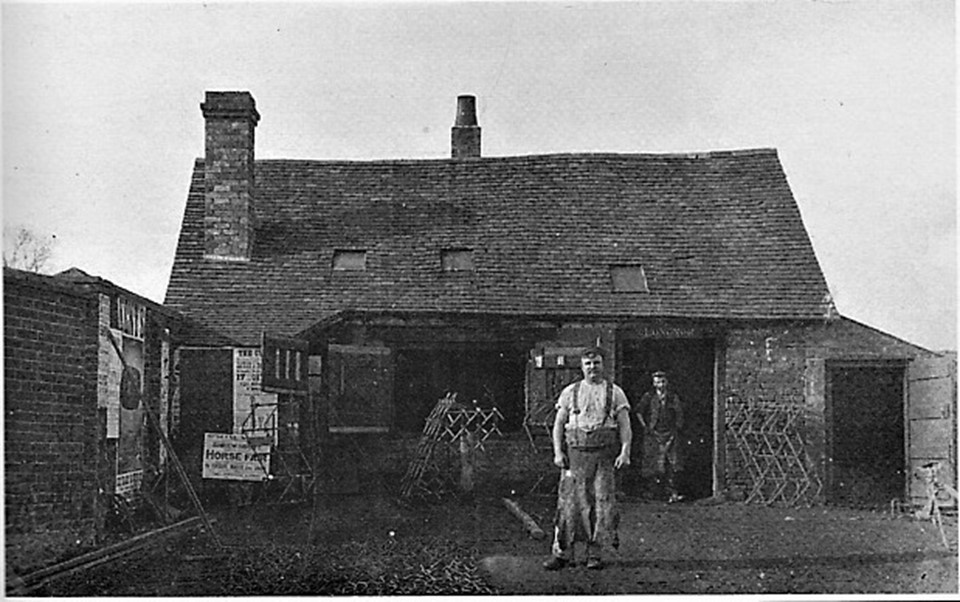
Ernest Everall, who was born in 1894, remembers the Smithy…
“John Bevan worked the Smithy, shoeing horses and repairing farm implements. Plough coulters, cultivator tines and harrows were hand dressed and sharpened.
Nearly all the estate ironwork was hand made; all wheels had iron tyres or strakes. Horseshoes were hand forged. So there was plenty of work for the smith. And also for W Higgs, the wheelwright, doing woodwork, making and repairing wheels and bodies of carts and wagons, which had to be high for the front wheels to lock. The modern flat-top lorries were only just coming into use.
Travel was very restricted – no cars, no buses – and to go by train meant getting to Leebotwood or Dorrington stations. The chief means of transport was horses, either ridden or driven.
The Squire had his carriage and pair of horses; the farmers had their hacks or cobs, with high traps or spring carts; the tradesmen – baker, butcher, etc all kept horses; also the parson, the doctor and the vet.Mrs Bright, the carrier, drove her horse and covered cart from ‘The Top’, Hoar Edge to Shrewsbury and back every Saturday, picking up goods, parcels and passengers.”
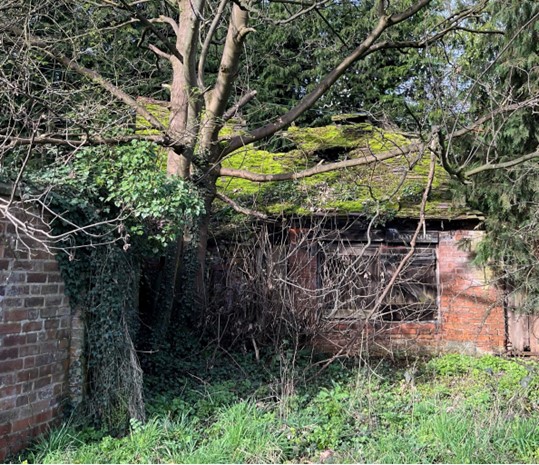
The Smithy closed in the 1960s, partly because its position on the bend on the main road was becoming increasingly dangerous, with busier and faster traffic.

Posters on the wall date the smithy photograph below to 1909. John Bevan was the Longnor blacksmith from around 1890 to 1913.

 Longnor Village History