WWII Evacuees
On 11 September 1939, the Longnor School Log Book records: “The School re-opened this morning; the opening having been postponed from 5th September owing to the outbreak of war” and goes on to describe the arrival of 61 evacuees from Liverpool and the arrangements to be made for their schooling:
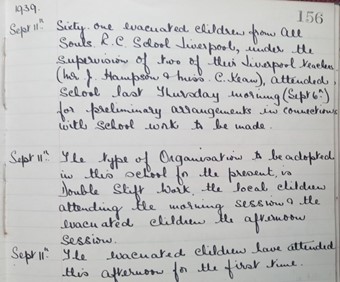
These arrangements continued until 16 October, when a temporary school for the Liverpool children opened in Leebotwood Parish Hall.
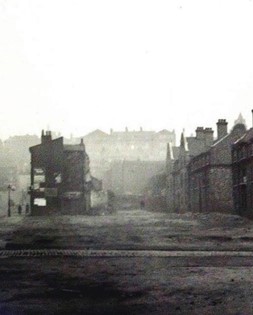
Apart from London, Liverpool was the most heavily bombed city in Britain during WWII, and thousands of children were evacuated to the relative safety of Shropshire, North Wales and rural Lancashire. On 6 January 1941, a second group of 17 ‘Official Evacuees’ from Liverpool arrived at Longnor School. Severe wintry weather forced the School to shut almost immediately for a week. Then soon after it re-opened, two of the evacuees went down with chicken-pox, and the following week five evacuees and one local child were found to be suffering from scabies – both notifiable diseases.
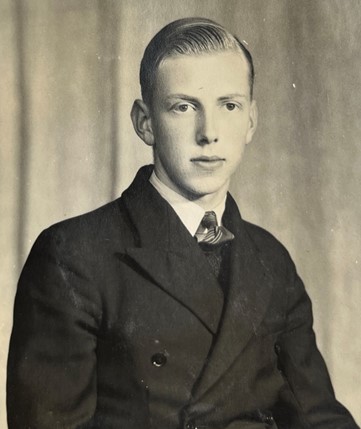
Colin Jones (pictured below) was one of 17 ‘Unofficial Evacuees’ – children sent privately to live with relatives or friends – who came to Longnor during the war. He lived with the Merrick family at 18 Back Lane. On 10 August 1942, the Head Teacher Mrs Ward recorded proudly in the School Log Book:
“Colin Jones, an Evacuee from Birkenhead, who took the Shropshire Secondary School Entrance Examination, has been awarded a Special Place. He has been in attendance at this school since 12 September 1940. This makes 3 Special Places awarded to this School this year.”
Many of the evacuees either left school or returned home within the first two years of the war. By 9 January 1942, there were just seven Official Evacuees in school and five Unofficial Evacuees. In August 1942, the temporary school in Leebotwood that had been set up for the group of evacuees from All Souls’ R.C. School in Liverpool was closed. The five remaining children there were transferred to Longnor.
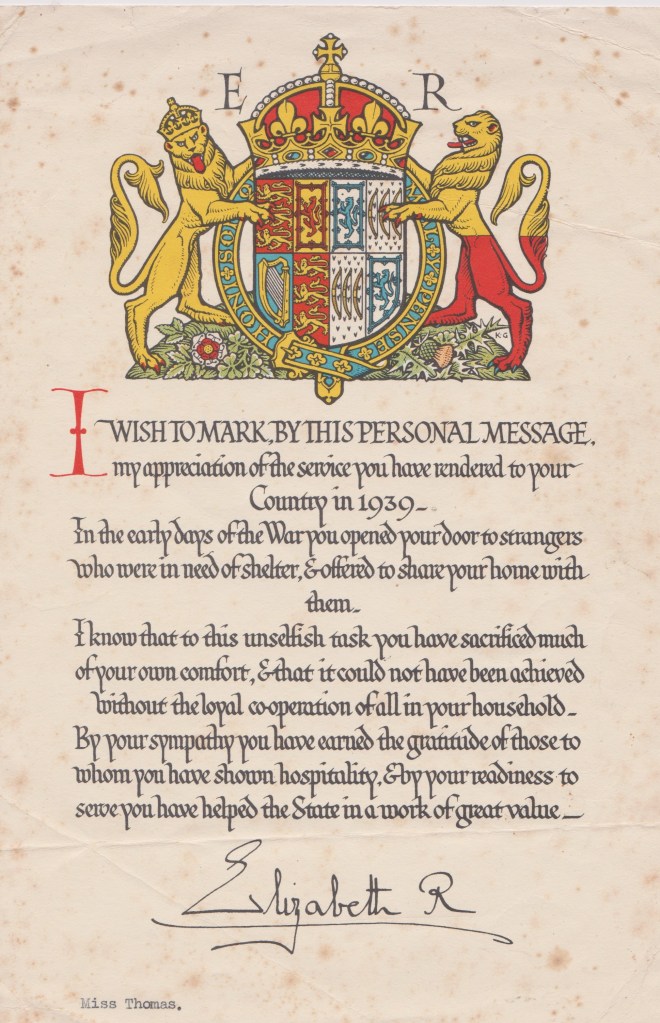
who looked after three brothers evacuated from Liverpool during WWII.
In June 1940, just before the Battle of Britain, Glengorse Boys’ Preparatory School on the Sussex coast was requisitioned for military use. The 60 pupils were evacuated to Longnor Hall, together with teaching staff, a matron and the Headmaster and his wife John and Helen Appleton. They remained there for the duration of the war.
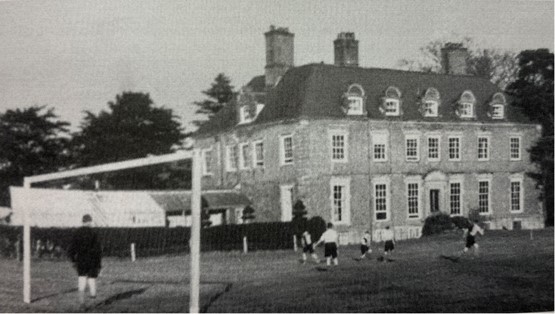
Helen oversaw the pastoral side of the school and wrote many letters from Longnor to her son, Robert Stainton, a former teacher at Glengorse who was serving with the RAF. His wife and baby daughter were also in Longnor for part of the war, living in Quality Row.
It must have been a demanding task for Helen, looking after 60 young boys far from home for so long – including nursing them through a measles epidemic which laid low almost the entire school. But her surroundings in Longnor seem to have worked their magic:
“I have so often felt outside myself with appreciation of beauty. Either of nature – the evening light across the park, turning the sandy cliff edge of the river and the deer to pure gold… I just watch these things. There is something more peaceful about that evening light than the sunrise….”
Christmas Day 1943
On Boxing Day 1943, Helen Appleton sat down to write to her son, Robert, who was serving in the RAF. Helen was temporarily living at Longnor Hall, where a school from Sussex had been evacuated lock, stock and barrel. Helen was married to the Headteacher, John Appleton, and was in charge of the non-teaching side of things at the school. On Boxing Day 1943 she had lots to tell her son…
“I got up about 7.30 and donned my magnificent green suit and attached all boilers and stove, as Mrs Ellis was not making her daily appearance. We set off for the kirk early, as I thought there might be a crowd. Poor padre, he was almost in tears. There were not 20 people in church – no choir turned up and the whole thing was a bit of a fiasco. The Vicar lashed the population of Longnor, when he got into the pulpit, on its lack of attendance in church. The rest of the sermon was rather poignant, I was a little shaky and glad to have a sherry at The Bank afterwards. Bread and cheese for Mogul and Micky (Helen’s husband and herself) and then we listened to the broadcast. Pop really dozing, yet managing to hold his pipe somehow. Sunday people called for tea at the Hall and I managed to ice a cake between lunch and tea, which made things more festive. It was difficult to arrange a dinner and serve it and look decent. However the service room is a help and I had the pudding in its pot in the lift. We toasted each other and all of you. He (Pop) looked at me for a long time and said his thoughts were better than words. Typical! (At the moment he is doing (school) reports and constantly interrupts to know what he shall say of major or minor). I left the dining table just as it was last night and we returned to the drawing room for port and coffee…We had a goodly array of presents which I most appreciated. Thank you ever so much for the Mosquito, which is going into Shrewsbury to be framed…A tragi comedy faced me when I entered my locked storeroom – a bunch of mistletoe in cold storage…”

Many thanks to Elizabeth Blackman, Helen’s grand-daughter, for sharing Helen’s letters.
 Longnor Village History